Weed Species are a common sight around the Waikato. Some are obvious invaders, while others have been growing in gardens and hedges for so long that many people don’t realise they are considered problem plants.
Waikato's mild climate, extensive gully systems and established gardens provide ideal conditions for invasive plants to spread. Once established, some species can grow rapidly, produce large amounts of seed and move from one property to the next through birds, wind, waterways or garden waste.
For Waikato property owners, being able to recognise these plants early can make controlling them much easier. Spring is a great time to have a look around your property for many of the common weed species.
Hamilton City Council’s Top 10 Weeds to Look Out For
Hamilton City Council currently highlights the following pest plants as species to keep an eye out for around the city:
Ivy
Japanese honeysuckle
Morning glory and Convolvulus
Jasmine
Moth plant
Alligator weed
Yellow Flag Iris
Tradescantia, also known as wandering willy
Privet – including tree privet and small-leaf privet
Woolly Nightshade
Each of these weeds cause problems in a slightly different way. Some climb and smother existing vegetation, some spread across the ground and prevent other plants from establishing, while others produce large quantities of seed and rapidly colonise new areas.
Two species we particularly want Waikato property owners to recognise are Privet and Woolly Nightshade.
Privet
Privet is incredibly common throughout Hamilton and the wider Waikato. Because it has been planted extensively in the past and often appears as a hedge, shrub or mature tree, it is easy to overlook. In many cases, people have privet growing on their property without realising it is an invasive species.
The two types commonly encountered locally are Tree Privet (Ligustrum Lucidum) and Chinese or Small-leaf Privet (Ligustrum Sinense).
How to Recognise Privet
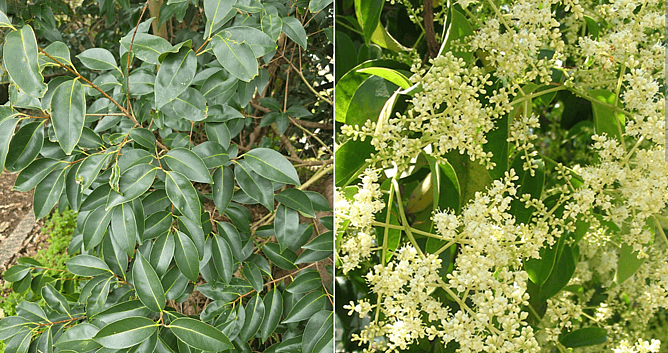
Tree Privet is an evergreen tree that can become surprisingly large if left unmanaged. Common features include:
Glossy, dark-green leaves
Leaves that are generally lighter underneath
Thick, dense foliage
Large sprays of small cream or white flowers
A very noticeable fragrance while flowering
Dark purple-black berries following flowering
Chinese or small-leaf privet generally grows as a smaller tree or shrub and has smaller, duller green leaves, often with slightly wavy edges.
Spring Is a Great Time to Start Looking
Flowering time can also help with identification. Small-leaf or Chinese Privet begins flowering through spring and into early summer, producing noticeable clusters of white, strongly scented flowers. Tree privet generally flowers a little later, through the summer months.
Spring is a great time to have a look around your property for privet before flowering and seed production really get underway.
If you have a hedge, shrub or tree that you suspect might be privet but you’re not sure, send us a photo or give us a call at Marc Doyle Treework. We can help identify it and talk you through the best options for removal and ongoing control.
Getting onto Privet before it flowers and fruits also means fewer berries and fewer opportunities for birds to spread seed into neighbouring properties and Hamilton’s gullies and green spaces.
Why Is Privet a Problem?
One of Privet’s biggest advantages as a weed is its ability to grow in many different environments. It can establish in gardens, hedges, roadsides, vacant land, gullies, wetland margins and beneath existing vegetation.
Once a Privet reaches maturity, it can produce large crops of berries. Birds readily eat the fruit and then carry the seeds elsewhere, allowing new privet plants to appear considerable distances from the original tree.
In natural areas, repeated seedling establishment can gradually change the vegetation. Privet can grow into a sizeable canopy tree, while smaller privet species can form dense groups beneath existing trees. In both cases, native seedlings and more desirable plants have to compete for space, light, water and nutrients.
Privet leaves and berries are poisonous if eaten by people or animals.
Does Privet Cause Hay Fever or Asthma?
Privet has developed a strong reputation for causing hay fever and asthma. Anyone who has stood beside a flowering Privet will understand why: the flowers have a very strong scent and can be unpleasant for some people.
However, Privet shouldn’t automatically be blamed for every bout of hay fever that occurs when it is flowering. Privet is mainly pollinated by insects rather than relying on the wind, so its pollen does not generally become airborne in the same quantities as pollen from plants such as grasses.
That said, the strongly scented flowers can still irritate some people, particularly those who already suffer from allergies, hay fever or respiratory sensitivity.
Preventing Privet from flowering through regular trimming can help in some situations, but from an environmental point of view, removing unwanted privet altogether also prevents it from producing berries and spreading further.
Woolly Nightshade
Woolly Nightshade (Solanum Mauritianum) is another plant we would encourage Hamilton homeowners to learn to recognise. It is sometimes also called tobacco weed or wild tobacco tree.
Unlike many slower-growing woody weeds, woolly nightshade can put on a surprising amount of growth in a relatively short period. A small plant that initially looks fairly insignificant can eventually develop into a substantial shrub or small tree.
How to Recognise Woolly Nightshade
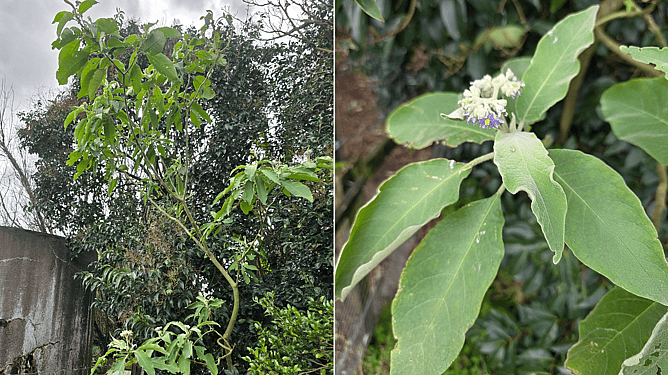
Once you’ve seen woolly nightshade a few times, it becomes relatively easy to identify. Look for:
Large, oval leaves
Grey-green foliage
A noticeably soft or velvety leaf surface
Fine hairs covering the leaves and young stems
A distinctive smell if the foliage is rubbed or crushed
Small purple or mauve flowers
Bright yellow centres in the flowers
Green berries that later ripen to yellow
The combination of large fuzzy leaves and purple flowers with yellow centres is particularly distinctive.
Why Is Woolly Nightshade a Problem?
Woolly nightshade is a fast-growing and prolific seeder. Once established, it can produce a very large quantity of fruit and seed. Birds eat the berries and spread the seed into neighbouring gardens, roadside vegetation, gullies and other areas.
It can establish quickly on disturbed ground and around the margins of existing vegetation. Where enough plants become established, woolly nightshade can create dense growth that makes it difficult for native and desirable plants to regenerate underneath.
Another challenge is the longevity of its seed. Woolly nightshade seed can remain viable in the soil for many years. This means removing the large plants may not be the end of the problem. New seedlings can continue appearing afterwards, so follow-up control is often just as important as removing the original tree.
Woolly Nightshade and Your Health
Woolly Nightshade deserves a little more caution than your average garden weed. The soft appearance of the foliage can be misleading. Its leaves and stems are covered in very fine hairs, and these can be released when the plant is handled, cut or disturbed.
For some people, these hairs can irritate the skin, eyes, nose, throat and respiratory system. People with asthma or other respiratory sensitivities may find working around the plant particularly unpleasant.
Its berries are also considered moderately toxic to people, with young children being of particular concern, and they may also be harmful to livestock.
For these reasons, removing a large Woolly Nightshade isn’t always a job we would recommend tackling without the right equipment and precautions.
Why Weed Species Control Matters
A single weed on one property might not seem particularly significant, but invasive plants don’t recognise property boundaries. A fruiting privet or woolly nightshade can become a seed source for surrounding gardens, reserves and gullies.
Other weeds cause different problems. Climbing species such as ivy and moth plant can grow through existing trees and vegetation. Tradescantia can form thick groundcover that restricts native regeneration, while pest plants associated with waterways can interfere with water movement and aquatic environments.
Hamilton has a fantastic network of gullies and green spaces, and controlling weeds on private properties is one small but worthwhile way property owners can help prevent invasive species continually spreading back into these areas.
Not Sure What You’ve Got Growing?
Plant identification isn’t always as simple as comparing one leaf with a photograph. Young plants can look different from mature specimens, and many pest species can resemble perfectly legitimate garden plants.
Spring is an ideal time to check your property before many pest plants move into their most active growing and flowering periods.
Our arborist and garden teams can help with:
Pest plant and weed identification
Privet removal
Woolly Nightshade removal
Large or difficult weed-tree removals
Stump treatment to reduce regrowth
Weed spraying and control
Follow-up management of seedlings and regrowth
Advice on replacement planting and revegetation
Catching invasive species while they are young can make control considerably easier and, importantly, can prevent them reaching maturity and producing another crop of seed.
If you’ve got something growing on your property and you’re unsure what it is, send us a photo or get in touch with us at Marc Doyle Treework.